Thursday, April 28, 2016

A failed pact tells you why Trump is winning


Like Stalin and Churchill huddled over a map of Europe in 1944, Ted Cruz and John Kasich began a very odd week by announcing — publicly, for reasons known only to them — that they were divvying up the remaining primary states in order to maintain individual spheres of influence. Cruz would get Indiana (which is next to Ohio), while Kasich would get New Mexico (which shares a border with Texas). Super-logical.

Of course, primary voters — unlike, say, Polish peasants — tend to do whatever they want, so all this plotting didn’t exactly make Cruz and Kasich grandmasters of global domination. More like a couple of guys playing Risk in somebody’s basement. Ural attacks Irkutsk! Coming for you next, Kamchatka!

And like most games of Risk, the whole thing fell apart within a few hours, as both campaigns backtracked and said they weren’t telling voters in any state not to vote for their chosen candidates, exactly. They just weren’t telling voters they should vote for their chosen candidates, either.

“I’m not telling anybody anything in Indiana, because I’m not competing there,” Kasich told the baffled hosts of NBC’s “Today” show. He accused the media of obsessing over process, which seemed odd, since it was his and Cruz’s campaigns that had apparently spent days, if not weeks, dividing up media markets according to the latest polls.

When Matt Lauer finally asked him point blank whom Republican voters in Indiana should vote for, Kasich replied: “I’m not getting into that, Matt. Things are not so plain and simple.”

No offense to Lauer or Savannah Guthrie here, but when you manage to make a morning show interview look like a scene from “Frost/Nixon,” it’s probably an indication that you should step back and think through what you’re doing.

In the end, the short-lived pact between Cruz and Kasich — followed closely by Cruz’s equally odd announcement that he was taking on a running mate, but more about that in a minute — served only to make a couple of things even clearer than they were before.

The first is that you should never, ever take strategic advice from Mitt Romney, unless it has to do with buying up companies and shedding overhead.

And the second is that there is a substantive vacuum at the heart of this year’s non-Trump campaigns — a vacuum that has, as much as anything else, enabled Trump to emerge, especially after Tuesday’s romp through the Eastern Seaboard, as a near-certain nominee.

It’s not just that the Cruz and Kasich campaigns managed, in the space of a few hours, to validate all of Trump’s conspiracy theories about the dark soul of the Republican establishment — although they did that pretty well.


For weeks, after all, Trump has been going around saying that corrupt Republicans are rigging the system against him, even though, as I’ve written before, the nominating rules of the party have always been the same.

But whatever high ground Trump’s opponents may have commanded was pretty much squandered when Cruz and Kasich announced that they were, in fact, going to game the system in an effort to subvert Trump at the convention. Now, when Trump says the party elites are trying to rig the process and undermine the voters, you’d have to admit he’s not crazy.

What’s more illuminating about the nonaggression pact, though, is that it even seemed plausible to both sides in the first place. In a world where Cruz and Kasich, Trump’s only remaining obstacles, were offering any galvanizing arguments of their own, there couldn’t possibly be any discussion of one side ceding voters to the other.

They represent, after all, two sharply opposed views of the party’s future. Cruz is a divider and a moral crusader, a peddler of nostalgia, a party crasher who essentially disdains government and those who serve in it.

Kasich is a bridge builder and a futurist, a successful insider who embraces the power of governance. Where Cruz sees a Republican Party that has destroyed itself by cravenly compromising its principles, Kasich sees a party that has grown too inflexible, too narrow and too often mean.

But neither camp has advanced much by way of a substantive vision. Cruz’s campaign is a bland rhetorical exercise, lacking any signature proposals. Kasich goes on about the Ohio record, but I defy anyone to synthesize his plan for replicating that success as president.

So why should a bunch of principles get in the way of tactics?

Kerry expresses reservations about all-volunteer U.S. military

Kerry delivers remarks on trade at an event with the Pacific Council on International Policy in Los Angeles
U.S. Secretary of State John Kerry delivers remarks on trade at an event with the Pacific Council on International Policy in Los Angeles, April 12, 2016. REUTERS/Jonathan Ernst

By Jon Herskovitz

AUSTIN, Texas (Reuters) - U.S. Secretary of State John Kerry said on Wednesday he feels all Americans should find a way to serve their country, suggesting the need for a renewal in public service that could also affect the military.

"I have deep reservations about just an all-volunteer military," Kerry said at a forum on the Vietnam War at the University of Texas in Austin.

"There should be shared responsibility among all Americans," he said. "I think that is one of the best ways you don’t have wars."

Kerry also said numerous deployments overseas under the current system placed enormous burdens on military families.

"Every American ought to find a way to serve, somehow. It doesn’t have to be in the military. I like the idea that everybody ought to give back something," he said.

Kerry, a former Navy officer, earned silver and bronze combat stars and three Purple Heart medals for his service in the Vietnam War. He become a prominent figure in the anti-war movement when he returned to the United States.

He said that, among the lessons from Vietnam, was that Americans must always treat returning veterans with dignity and respect regardless of whether a war was popular or unpopular.

Kerry, who was instrumental as a Senator in helping restore diplomatic ties with Vietnam, will accompany President Barack Obama on a trip there next month.


Source : https://www.yahoo.com/news/kerry-expresses-reservations-volunteer-u-military-023627806.html?nhp=1


Tennessee law to allow counselors to deny service based on beliefs

File photo of Tennessee Republican Governor Haslam listening during the National Governors Association Winter Meeting in Washington
Tennessee Republican Governor Bill Haslam listens during the National Governors Association Winter Meeting in Washington, in this February 22, 2014, file photo. REUTERS/Mike Theiler/Files

By Alex Dobuzinskis

(Reuters) - Tennessee's Republican governor on Wednesday signed a law allowing mental health counselors to refuse service to patients on "sincerely held principles," the latest in a string of U.S. state measures criticized as discriminatory against the gay community.

Governor Bill Haslam signed the bill into law three weeks after it was approved by the legislature. It goes into effect immediately.

"The substance of this bill doesn't address a group, issue or belief system," Haslam said in a statement.

"Rather, it allows counselors – just as we allow other professionals like doctors and lawyers – to refer a client to another counselor when the goals or behaviors would violate a sincerely held principle."

An earlier version of the bill had allowed counselors to refuse service to patients on religious grounds, but it was amended to remove any direct reference to religion.

The law protects therapists and counselors from legal action when they cite their personal principles in refusing service, despite a provision in the American Counseling Association's code of ethics barring members from such denials of service.

"This measure is rooted in the dangerous misconception that religion can be used as a free pass to discriminate," Hedy Weinberg, executive director of the American Civil Liberties Union of Tennessee, said in a statement.

Weinberg called the bill one in a series of "attacks" on the lesbian, gay, bisexual and transgender community following last year's ruling by the U.S. Supreme Court striking down state bans on gay marriage.

Haslam had previously told Nashville Public Radio he was considering the effect the legislation may have on Tennessee and its citizens, as laws criticized as discriminatory against the LGBT community has drawn increased scrutiny in several states.

In North Carolina, a number of companies including PayPal Holdings and Deutsche Bank have canceled plans to add jobs in the state after it passed a law requiring people to use bathrooms or locker rooms in schools and other public facilities that match the gender on their birth certificate rather than their gender identity.

Haslam said he decided to sign the counseling bill in part because it forbids denial of service to patients in danger of harming themselves or others.

Earlier this month, Haslam disappointed some Christians in the state when he vetoed legislation that would have made the Bible Tennessee's official book. The governor said that violated the U.S. Constitution.


Source : https://www.yahoo.com/news/tennessee-law-allow-counselors-deny-based-beliefs-130359460.html?nhp=1

U.S. seeks three more years in prison for mobster Bulger's girlfriend

Booking mug handout of Catherine Greig, longtime girlfriend of former mob boss and fugitive James "Whitey" Bulger
Catherine Greig, longtime girlfriend of former mob boss and fugitive James "Whitey" Bulger, is seen in a booking mug photo released to Reuters August 1, 2011. REUTERS/U.S. Marshals Service/U.S. Department of Justice/Handout


By Scott Malone

BOSTON (Reuters) - Federal prosecutors on Thursday are set to ask a judge to order former Boston mob boss James "Whitey" Bulger's girlfriend to spend three more years in prison for refusing to say if anyone helped the couple during their 16 years on the run.

But lawyers for Catherine Greig, 64, said that punishment was too severe for a woman they described as an animal lover and model prison inmate who was never accused of joining Bulger's murder and mayhem.

Greig was arrested alongside Bulger in 2011 when federal agents caught up with the pair in a seaside condo in Santa Monica, California, where they were living with a cache of weapons and cash. Bulger fled Boston in 1995 after a tip from a corrupt FBI agent that arrest was imminent.

He was on the FBI's "Ten Most Wanted" list for most of his time on the run and his story inspired multiple films, including 2015's "Black Mass."

Bulger, now 86, was convicted in 2013 of murdering or ordering the killings of 11 people, following a months-long racketeering trial that exposed his corrupt relationship with the Boston office of the FBI, which turned a blind eye to Bulger's Irish-American gang as it focused its energy on the Italian-American Mafia. He is currently serving two consecutive life sentences.

Greig was sentenced to eight years in 2012 after pleading guilty to identity fraud and harboring a fugitive. Her sentence on contempt of court charges for refusing to testify would be added onto that time.

"She did not plead guilty to aiding and abetting a man who by the government's account was a mastermind of criminal activity and a killing machine," her attorneys wrote as they recommended a six-month sentence. "For 16 years she kept him docile, happy and avoiding any violence."

They also noted that Greig's initial sentence was longer than the five years Bulger associate Kevin Weeks served for his role as an accessory to five murders.

Federal prosecutors argued that Greig was inflicting further injury on the survivors of Bulger's victims by refusing to testify.

The pair have held to the underworld's code of silence in their court appearances. Bulger's attorneys began his trial by calling him an "organized criminal" and spent much of their energy denying prosecutors' claims that he had been an FBI informant.

Bulger claims to have paid agents for tips but provided no information in return.

Source : https://www.yahoo.com/news/u-seeks-three-more-years-prison-mobster-bulgers-113540750.html?nhp=1

Warrants served in California linked to San Bernardino case: FBI

A memorial still remains outside as workers return to work for the first time at the Inland Regional Center (IRC) in San Bernardino
A memorial still remains outside as workers return to work for the first time at the Inland Regional Center (IRC) in San Bernardino, California, January 4, 2016. REUTERS/Mike Blake


LOS ANGELES (Reuters) - FBI agents served warrants in Corona and Ontario, California, on Thursday morning in the investigation of the December mass shooting by a radicalized Muslim couple in San Bernardino, a spokeswoman for the U.S. Federal Bureau of Investigation told Reuters.

The Riverside-based Press-Enterprise newspaper reported the Corona warrant was served at the home of Syed Raheel Farook, the brother of Syed Rizwan Farook, who along with his wife, Tashfeen Malik, opened fire at a Dec. 2 holiday party and killed 14 people. The couple died the same day in a shootout with police.

After confirming the warrants, Laura Eimiller, spokeswoman for the FBI's Los Angeles field office, said the U.S. Attorney's office would provide more details on Thursday.

A representative for the U.S. Attorney did not immediately return a call or email seeking comment.

The FBI searched the home of Syed Raheel Farook in February, a law enforcement source close to the investigation confirmed to Reuters at the time.

Los Angeles television station KABC reported on Thursday that three indictments were returned on Wednesday in connection with the San Bernardino shooting.

Reuters could not immediately confirm the KABC report.

Source : https://www.yahoo.com/news/warrants-served-california-related-san-bernardino-case-fbi-161353327.html?nhp=1

Trump’s ‘America First’ neo-isolationism


Republican presidential candidate Donald Trump delivers a foreign policy speech at the Mayflower Hotel in Washington, D.C., April 27, 2016. (Photo: Jim Bourg/Reuters)

After rolling over its opponents in all five Eastern seaboard primaries, the Trump juggernaut entered Washington, D.C., on Wednesday, where the victorious candidate gave a speech intended to add gravitas to his scattershot positions on foreign policy and national security. As he edges closer to becoming the Republican nominee for president, Donald Trump field-tested a new bumper sticker to describe his unique brand of economic populism and trade protectionism, anti-immigrant nativism and a neo-isolationism that eschews foreign entanglements: “America First!”

“The direction I’m outlining will return us to a timeless principle — always putting the interests of the American people and American security above all else. It has to be first,” Trump said. “That will be the foundation of every single decision that I make. ‘America First’ will be the major and overriding theme of my administration.”

Putting America first hardly seems a controversial idea for a U.S. president, but the phrase has a long lineage in Republican politics dating back to the isolationist, noninterventionist wing of the party in the 1930s and 1940s. The America First Committee of the 1930s was established to keep the United States out of the approaching Second World War, and its noninterventionist agenda was embraced by Republican Sen. Robert Taft, who ran for his party’s presidential nomination in 1948 and 1952. Many Republican foreign policy experts in particular worry that, coupled with Trump’s strongman persona and what many see as his strong-arm instincts, the America First agenda would amount to a rejection of the United States’ outsize role in protecting the liberal international order put in place after World War II.

Under his America First conceit, Trump recited a familiar litany of foreign policy positions and criticisms of the Obama administration and former Secretary of State Hillary Clinton. He once again suggested a moratorium on Muslim immigration and opposed the Obama administration’s “senseless” immigration policies that “import extremism.” He threatened to punish U.S. companies that move jobs overseas and to quickly reverse the country’s lopsided trade imbalance with China by using economic coercion. He promised to rebuild depleted U.S. military power but also to use it sparingly, eschewing nation-building or democracy promotion overseas. In the early days of his administration, a President Trump would hold summits with European and Asian allies and demand that they pay America more for its security umbrella, or else he would be willing to close it and walk away from those alliances.

Going further than just bashing the free-trade agenda, Trump denigrated multilateral agreements and international institutions that undergird a rules-based international order and the dynamic of globalization that has been a driving force in spreading liberal economic and political values for decades.

“No country has ever prospered that failed to put its own interests first. Our friends and enemies put their interests above ours, and we must start doing the same,” Trump said. Insisting that nation-states remain the foundation of “happiness and harmony,” he voiced skepticism of “international unions that tie us up, and bring America down. Under my administration we will never enter America into any agreement that reduces our ability to control our own affairs. … No longer will I surrender our people to the false song of globalization.”

Arguably not since Patrick Buchanan in 1996, and possibly not since Taft in 1952, has a serious Republican presidential hopeful embraced such an isolationist platform or called into question an international order based on free markets and international institutions, and both of those previous Republican candidates ultimately lost the nomination.

In Trump’s telling, his agenda is not isolationist, but rather a sign of strong leadership. Allies and adversaries alike will respect America’s newfound strength and determination, in his view, and respond to border walls, trade tariffs and demands for more burden-sharing by quickly getting into line. What worries many Republican foreign policy experts is that that expectation doesn’t comport with reality as they understand it.

Wednesday, April 20, 2016

Shakespeare's school to open to visitors to celebrate 400th anniversary


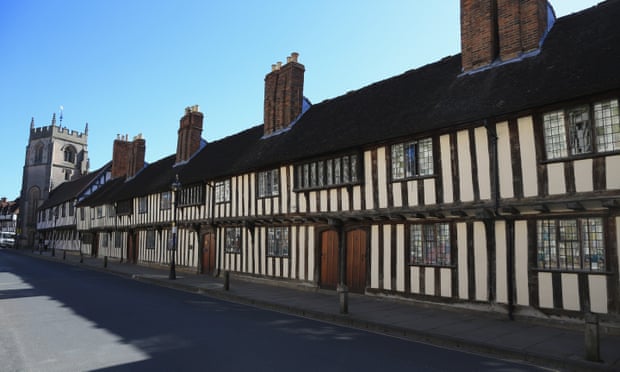
The school room in Stratford-upon-Avon where Shakespeare learned “small Latin and less Greek” – as affectionately mocked by his friend Ben Jonson – will open its doors, scarred by centuries of rowdy schoolboys, as part of the town’s commemoration of the 400th anniversary of the death of its most famous son.

“We’re not opening a museum,” said Bennet Carr, head of the King Edward VI school, which will continue to use the building, “we’re welcoming visitors into our world.”

The children and teachers are well used to the tourists pressing their noses and camera lenses beseechingly against the diamond paned windows. From this weekend, after a £1.8m restoration mainly funded by the Heritage Lottery Fund, the tourists will be welcomed in and offered the chance to sit though a Tudor grammar school lesson – but only after 11am on school days. The early mornings will still be reserved for school assemblies and classes, though the pupils will now sit on new benches made of oak from a Warwickshire woods once owned by Shakespeare’s family.

The historian Michael Wood has called it a treasure, “one of the most atmospheric, magical and important buildings in the whole of Britain”.

“Even though the evidence suggests he was yanked out of school without finishing the curriculum, due to his father’s dire business troubles, what he learned here stayed with him for life,” Wood said. “Right through to his last plays he was still drawing on stories he knew and phrases he had translated and learned by rote so many years earlier.”

 Performance guide Sam Lesser gives a tutorial in Latin to pupils of King Edward VI School
Facebook Twitter Pinterest
 Performance guide Sam Lesser gives a tutorial in Latin to pupils of King Edward VI School Photograph: Christopher Furlong/Getty Images
The project manager Lincoln Clarke said the school’s importance for Shakespeare was incalculable. “The birthplace is obviously key, because that’s where he happened to be born, but this is the building that made him Shakespeare, where he learned so much, witnessed so much, that inspired him for the rest of his life. It is of worldwide significance.”

The school was venerable even in Shakespeare’s day, and the building much older: dendrochronology work during the restoration has dated the earliest timbers to 1420. “We bear his name but we don’t regard Edward VI as our founder,” Carr said. “He stole the school when he abolished its true founder, the Guild of the Holy Cross – but at least he had the sense not to abolish the school.”


The stories you need to read, in one handy email
 Read more
Fundraising continues, partly as a result of the dramatic reappearance of John the Baptist. It was known that the building had ancient wall paintings, including the earliest Tudor roses in England, which the town – which had sided with the Yorkists – clearly thought it politic to add when the regime changed.

A whole painted wall emerged in the conservation work, including faint but still recognisable images of the Virgin Mary and the Trinity, probably deliberately defaced and covered over in the Reformation, possibly by Shakespeare’s own father during his term as mayor.

Then a few months ago, after an image reconstructing the original appearance of the original painting had been completed, an unexpected and startlingly well-preserved painting of the John the Baptist emerged on a beam, holding a lamb, still with traces of gilding on his staff.

Advertisement

“His face and his blazing eyes were uncovered first - it was a transfixing moment,” Carr recalled.

Among the genuine treasures the visitors will see, one outrageous fake has been kept: a little pane of glass into which somebody – almost certainly a schoolboy – has scored “William Shakespeare 1575”. Of the six known genuine signatures of Shakespeare, all are different and not one spells his name in the way now regarded as correct.

“We’re expecting around 100,000 visitors a year,” said Carr, who lives a few yards from the schoolroom, on the other side of an absurdly picturesque courtyard. “So that could be 100,000 pairs of eyes peering in at me eating my cornflakes. I’m OK with that, it comes with the job, but I’m not sure the scale of it has entirely dawned on my wife yet.”

Electricians, carpenters and painters are still working flat out this week. The admission on Saturday will be free. “It’s our gift to the town,” Clarke said, “and also our get-out-of-jail-free card in case we’re not absolutely completely 100% finished.”

• Shakespeare’s Schoolroom and Guildha

Source by : http://www.theguardian.com/culture/2016/apr/20/shakespeares-school-to-open-to-visitors-to-celebrate-400th-anniversary

 
Design by Free WordPress Themes | Bloggerized by Lasantha - Premium Blogger Themes | Best WordPress Themes